
How Higher Mortgage Rates Affect Chicago Home Prices in 2026
Higher mortgage rates have changed what many buyers can afford, but the impact of rising interest rates on home prices in Chicago is more complicated than a simple “rates up, prices down” formula.
Mortgage rates affect monthly payments and purchasing power. Chicago home prices also depend on housing supply, buyer demand, property type, condition, price range, taxes, assessments, and the amount of competing inventory available to the same buyers.
For homeowners considering a sale, the practical question is not simply whether mortgage rates are high. It is how current financing conditions may affect the buyer pool for a specific property—and what that means for pricing, preparation, timing, and potential net proceeds.
How do higher mortgage rates affect Chicago home prices?
Higher mortgage rates generally reduce buyer purchasing power because financing the same loan becomes more expensive. That can cool demand and increase price sensitivity. But higher rates do not automatically make Chicago home prices fall. Housing supply, property type, condition, price range, and local buyer demand also influence how prices respond.
Chicago Housing Market Snapshot: Rates, Prices and Sales
Current data illustrates why mortgage rates and home prices should be evaluated together rather than treated as opposites.
Illinois REALTORS® reported that the City of Chicago median sale price was $425,000 in July 2026, up 13.3% from a year earlier, while closed sales totaled 2,137, down 2.9% year over year. This is a useful example of why fewer transactions do not automatically mean falling prices.
Freddie Mac separately reported a national average 30-year fixed mortgage rate of 6.71% as of September 3, 2026. That figure is a national weekly benchmark, not a rate every Chicago borrower will receive.
Sources: Illinois REALTORS® July 2026 Housing Market Update and Freddie Mac Primary Mortgage Market Survey .
How Do Higher Mortgage Rates Change Buyer Affordability?
Mortgage rates usually affect the housing market first through the monthly payment.
Consider a hypothetical $400,000 purchase with 20% down. The buyer would finance $320,000 with a 30-year fixed-rate mortgage.
| Mortgage Rate | Approx. Monthly Principal & Interest | Difference From 6.00% |
|---|---|---|
| 6.00% | $1,918 | — |
| 6.50% | $2,023 | +$105/month |
| 7.00% | $2,129 | +$211/month |
Moving from 6.00% to 7.00% adds roughly $211 per month in principal and interest on this hypothetical loan.
Buyers must usually evaluate more than principal and interest. Depending on the property and financing, total ownership costs can also include property taxes, homeowners insurance, mortgage insurance, condominium or HOA assessments, utilities, maintenance, and repairs.
Why Haven't Higher Mortgage Rates Automatically Pushed Chicago Prices Lower?
Mortgage rates affect housing demand, but prices are determined by both demand and supply. If borrowing becomes more expensive while the number of homes available to buyers also remains constrained, higher rates may not create the broad price decline some homeowners expect.
Housing supply matters
When financing becomes more expensive, some buyers may reduce their target price, change property types, or postpone a purchase.
But price pressure also depends on how many comparable properties those buyers have to choose from. Limited competing inventory can reduce some of the downward pressure that weaker affordability might otherwise create.
The mortgage-rate lock-in effect can affect supply
Homeowners who already have substantially lower mortgage rates can face a financial tradeoff when considering a move. Selling may mean giving up an older mortgage and potentially financing another home at a higher current rate.
Housing economists commonly refer to this as the mortgage-rate lock-in effect. It is one factor that can influence listing decisions, although individual homeowners sell—or stay put—for many different reasons.
For additional Chicago inventory context, read DEI Realty LLC's Chicago real estate market updates .
Do Slower Home Sales Automatically Mean Falling Prices?
No. Sales activity and sale prices measure different parts of the market.
Price and transaction volume are not the same metric
Closed sales measure how many transactions occurred.
Median sale price measures the midpoint of the prices of properties that closed during the reporting period.
In July 2026, Illinois REALTORS® reported City of Chicago closed sales down 2.9% year over year while the median sale price was up 13.3%. That does not mean one measure caused the other. It demonstrates why a slower transaction market should not automatically be described as a falling-price market.
Where Can Higher Mortgage Rates Matter Most for a Chicago Property?
Citywide statistics are useful for context, but buyers make decisions one property at a time.
Price range
Higher financing costs can change the purchase price some buyers are comfortable carrying. That can affect the size of the buyer pool at different price points.
Property taxes
Two Chicago properties with similar purchase prices can have different property-tax obligations. Buyers evaluating affordability should review property-specific tax information rather than applying a generic citywide assumption.
Condo and HOA assessments
For condominium buyers, monthly assessments become part of the recurring ownership cost. Buyers may also evaluate association reserves, building insurance, planned projects, and potential special assessments when considering the overall financial picture.
Property condition
A home requiring significant repairs creates another potential cost. When financing and recurring housing expenses already consume more of a buyer's budget, anticipated repairs may affect how that buyer evaluates price and terms.
Competing inventory
The most relevant competition is often not every home in Chicago. It is the group of reasonably comparable properties available to the same buyer pool at the same time.
What Do Higher Mortgage Rates Mean for Chicago Home Sellers?
Higher mortgage rates can make buyers more sensitive to total monthly costs, but rates alone do not determine what an individual Chicago property is worth. Sellers should evaluate recent comparable sales, current competition, condition, ownership costs, selling expenses, and timeline before choosing a strategy.
Price for today's market
Sellers may remember what a nearby property sold for last year or have a particular financial goal in mind. Buyers are evaluating today's alternatives.
Pricing should therefore begin with relevant recent comparable sales and current competing listings, adjusted for meaningful property differences.
Evaluate preparation strategically
Some properties may benefit from cleaning, repairs, presentation, or other preparation before going to market. Others may not justify major renovation.
The useful question is not simply whether something can be fixed. It is whether the likely market benefit justifies the time and cost of doing the work before a sale.
Account for holding costs
Time has a cost. Depending on the property, continued ownership before closing may involve mortgage payments, property taxes, insurance, utilities, assessments, maintenance, and other expenses.
Sale Price vs. Net Proceeds: Which Number Should Sellers Compare?
A higher sale price does not automatically produce a better financial outcome. Sellers should compare estimated net proceeds after applicable transaction expenses, negotiated credits, preparation costs, holding costs, and other seller obligations.
The actual calculation varies by property and transaction. Seller costs should therefore be estimated using property-specific information rather than assumed national percentages.
This is also why the highest offer is not automatically the strongest offer. Price matters, but financing, contingencies, concessions, anticipated repairs, timing, and the likelihood of reaching closing under the agreed terms can matter as well.
Traditional Listing vs. As-Is Listing vs. Direct Sale
Chicago homeowners can have more than one path to a sale. The appropriate strategy depends on the property, timeline, financial priorities, and amount of preparation the seller wants to take on.
| Selling Option | What It Generally Involves | What to Evaluate |
|---|---|---|
| Traditional Market Listing | Broad market exposure with preparation and marketing appropriate for the property. | Preparation, showings, market exposure, contingencies, transaction expenses, and expected timeline. |
| As-Is Market Listing | Open-market exposure without the seller committing to substantial pre-sale repairs. | Condition, buyer expectations, inspections, contract terms, pricing, and disclosure obligations. |
| Direct-Sale Option | The seller evaluates an offer outside a conventional broad-market listing process. | Price, terms, timing, preparation requirements, transaction structure, and estimated net proceeds. |
None of these approaches is automatically the best option for every seller.
For more detail about selling without completing substantial repairs, read DEI Realty LLC's guide to selling a house as-is .
Does Selling As-Is Eliminate Illinois Disclosure Requirements?
No—not automatically.
Illinois' Residential Real Property Disclosure Act states that the disclosure report does not prevent the parties from agreeing to sell residential real property in “as is” condition. The statutory form also states that completing the disclosure report creates legal obligations for the seller.
The form further explains that an as-is agreement is not a substitute for inspections or warranties the parties may choose to obtain or negotiate.
Sellers should review their specific obligations with a qualified Illinois real estate attorney when appropriate.
Official source: Illinois General Assembly — 765 ILCS 77/35 .
How Should Chicago Sellers Compare Their Options?
- Review relevant recent comparable sales.
- Identify the properties currently competing for the same buyers.
- Evaluate the property's present condition.
- Determine which preparation or repairs are financially justified.
- Estimate seller-side transaction expenses for each strategy.
- Estimate ongoing ownership and holding costs.
- Decide how important the closing timeline is.
- Compare financing, contingencies, concessions, and other terms.
- Estimate potential net proceeds under each realistic scenario.
Looking at these factors together provides a stronger decision framework than making a selling decision from a mortgage-rate headline alone.
Should You Wait for Mortgage Rates to Fall Before Selling?
No one can reliably predict whether waiting will create a better outcome for an individual Chicago seller. Mortgage rates can change, but so can home prices, inventory, competing listings, property condition, ownership costs, and personal circumstances.
Freddie Mac's weekly survey illustrates that rates can change over relatively short periods. The average 30-year fixed rate was 6.43% on July 2, 2026 and 6.71% on September 3, 2026.
That history does not tell us where rates will move next. Instead of basing a sale entirely on a forecast, homeowners can evaluate the market that exists today and compare it with their property, costs, timeline, and goals.
Buyers considering the other side of the timing question can read Should You Wait for Mortgage Rates to Drop Before Buying a Home?
Get Your Free Chicago Seller Options Comparison
Compare how a traditional market listing, an as-is listing, and a direct-sale option may differ based on your property's condition, preparation needs, estimated selling expenses, timeline, and potential net proceeds.
The goal is not to assume one route is automatically better. It is to understand the tradeoffs before you decide.
Compare My Selling Options Or explore current Chicago market updatesFrequently Asked Questions
Do higher mortgage rates always lower Chicago home prices?
No. Higher mortgage rates can reduce purchasing power, but home prices also depend on housing supply, buyer demand, property type, price range, condition, and competing inventory. Rates are an important market factor, but they do not independently determine an individual property's value.
Why can Chicago home prices rise when mortgage rates are high?
Supply and demand can move at the same time. If financing becomes more expensive while available housing remains constrained, the reduced supply of competing properties can offset some downward price pressure. Current statistics should be evaluated by reporting period and property type rather than treated as a guarantee of future prices.
Are mortgage rates the same as the Federal Reserve's interest rate?
No. The Federal Reserve does not directly set 30-year fixed mortgage rates. Mortgage rates are influenced by broader financial-market conditions and other factors. Homeowners should use actual mortgage market data rather than assuming a Federal Reserve move will produce an identical change in mortgage rates.
Should I lower my Chicago home's asking price because rates are high?
Not automatically. Pricing should consider relevant comparable sales, competing listings, property condition, location, price range, and current market activity. Mortgage rates provide useful context but do not determine the appropriate asking price by themselves.
Can I sell a Chicago property as-is?
Illinois law recognizes that parties may contract for a residential property sale in as-is condition. That does not make the state's disclosure framework irrelevant. Sellers should verify their obligations and obtain appropriate legal advice for their individual circumstances.
Is a direct sale better than listing a Chicago property?
Not necessarily. Traditional listings, as-is listings, and direct-sale options can involve different prices, expenses, preparation, timelines, contingencies, and other terms. Sellers should compare the complete transaction rather than assuming one method is universally better.
What number should a Chicago seller compare when evaluating offers?
Sale price is important, but estimated net proceeds can provide a more complete comparison because they account for applicable transaction expenses, concessions, preparation costs, holding costs, and other seller obligations.
Sources and Methodology
- Illinois REALTORS® — July 2026 Illinois Housing Market Update — City of Chicago closed sales and median sale-price figures.
- Freddie Mac — Primary Mortgage Market Survey — national weekly mortgage-rate benchmark.
- Freddie Mac — PMMS Archive — historical 2026 weekly mortgage-rate observations.
- Illinois REALTORS® — Market Statistics Methodology — explanation of Illinois REALTORS® market data and MLS reporting.
- Illinois General Assembly — Residential Real Property Disclosure Act, 765 ILCS 77/35 .
Editorial and Fair Housing note: DEI Realty LLC's housing and community content focuses on objective considerations such as property characteristics, housing costs, inventory, market activity, transportation, services, amenities, taxes, assessments, condition, and maintenance. Housing recommendations should not be based on protected characteristics or demographic steering.
Professional disclaimer: This article is for general educational purposes and does not constitute legal, tax, financial, mortgage, investment, appraisal, or other individualized professional advice. Mortgage rates, laws, taxes, property information, market conditions, and transaction expenses can change. Buyers and sellers should verify current property-specific information and consult appropriately qualified professionals when specialized advice is needed.
Quick answer: Rising interest rates usually cool demand before they trigger a broad price collapse. In Chicago, low inventory, the mortgage rate lock-in effect, and neighborhood-level demand can keep home values more stable than the national headlines suggest.
For readers searching the exact phrase impact of rising interest rates on home prices in Chicago, the takeaway is simple: rates matter, but inventory, condition, and buyer competition still determine whether prices soften, hold, or move higher.
Reviewed for local market context by DEI Realty LLC on July 29, 2026.
Why rising rates matter in Chicago
Chicago housing market interest rates matter because mortgage rates affect monthly payment size, buyer qualification, and the number of active shoppers in the market. When rates move up, some buyers lose purchasing power and others pause their search, which can slow the pace of offers, increase average days on market Chicago 2026 buyers should expect to see in certain segments, and create a visible housing market shift Chicago sellers can feel right away.
For sellers, that can mean more price sensitivity, more negotiation, and a bigger need to understand net proceeds rather than focusing only on the list price.
- For buyers: higher payments can reduce the home price they qualify for.
- For sellers: fewer qualified buyers can mean longer marketing times.
- For both: location, property condition, and financing type matter more when rates are elevated.
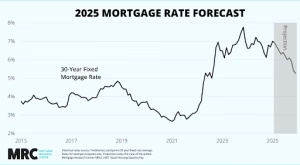
Illustration of how rising rates can affect affordability and buyer demand.
Why Chicago prices have stayed resilient
Chicago real estate market trends 2026 are not the same as the national market, and the Chicago housing market forecast 2026 depends heavily on inventory, financing, and neighborhood-level demand. Inventory shortages, the mortgage rate lock-in effect Chicago homeowners experience, and selective buyer demand can help support prices even when borrowing costs are high.
That is especially true when a property is well located, priced correctly, and presented in a way that speaks to a specific buyer pool.
- Chicago real estate inventory shortage: fewer homes for sale can keep values firmer.
- Chicago condo market vs single-family homes: condos often react differently than detached homes.
- Chicago metropolitan area home prices: city, county, and suburban trends can diverge.
- Cook County real estate market trends, DuPage County housing market, and Lake County IL home prices: each area can move on its own timeline.
Local markets do not all move together, so a Chicago condo, a Cook County house, and a Lake County home may respond differently to the same rate change.
Chicago market snapshot for 2026
If you are asking, will Chicago home prices drop this year, the better answer is that it depends on the property type, neighborhood, and inventory level. A small condo near transit, a single-family home in a strong school district, and an inherited property needing repairs can each follow a different pricing path. That is why readers comparing Chicago metropolitan area home prices, Cook County real estate market trends, DuPage County housing market, and Lake County IL home prices need neighborhood-level context instead of a one-size-fits-all answer.
Here is the simplest way to read the market:
- Higher rates reduce buying power.
- Low inventory can keep prices from falling quickly.
- Longer days on market often show up first in overpriced or condition-challenged listings.
- Buyer confidence changes faster than seller expectations, which is why pricing strategy matters.

When fixed rates stay high, some buyers explore adjustable-rate mortgages, which changes the mix of demand.
What this means for sellers
If you are comparing the best way to sell a house in Chicago, start with your net proceeds. That is the cleanest way to compare a traditional listing, a cash offer, or an as-is sale, especially if you are weighing cash home buyers Chicago, sell my house fast Chicago, or traditional listing vs cash offer Chicago options.
| Factor | Traditional listing | Cash or as-is sale |
|---|---|---|
| Speed | Usually slower | Usually faster |
| Repairs | Often expected | Usually limited or none |
| Certainty | Depends on financing and inspection | Often simpler and more predictable |
| Net proceeds | Can be higher, but with more carrying costs | Can be lower on price, but may save on repairs and time |
Hidden costs of selling a house in Chicago can include repairs, staging, utilities, winter holding costs, HOA dues, and buyer repair credits Chicago real estate deals sometimes negotiate. Property tax prorations Illinois real estate sellers should expect, along with transfer taxes, can also affect the final number.
Important: confirm Chicago CTA transfer tax who pays, Cook County real estate transfer tax rate, and any disclosure requirements with your title company or attorney before you publish final sale assumptions. If your goal is to avoid winter holding costs Chicago real estate sellers sometimes overlook, those line items matter even more. This article is not legal advice.

Pricing and seller strategy should reflect the condition of the home, the neighborhood, and the buyer pool.
When selling as-is makes sense
Selling a house as-is in Chicago can be a practical choice if the home needs work, the seller is managing an inherited property, or the owner wants to avoid holding costs and repair delays. That is often where cash home buyers Chicago homeowners compare against a traditional listing can become part of the conversation, especially for selling a house needing repairs Chicago or selling an inherited property Chicago.
- selling a house needing repairs Chicago
- selling an inherited property Chicago
- sell my house fast Chicago
- traditional listing vs cash offer Chicago
- how to calculate net proceeds from home sale Chicago
As-is does not remove every obligation. The Illinois Residential Real Property Disclosure Act selling as-is situations still require careful review, so sellers should confirm their responsibilities before moving forward.
Chicago search terms this guide answers
This guide was written to answer the most common questions about Chicago housing market interest rates, how do interest rates affect home prices in Chicago, Chicago real estate market trends 2026, Chicago housing market forecast 2026, average days on market Chicago 2026, housing market shift Chicago, and will Chicago home prices drop this year.
It also covers mortgage rate lock-in effect Chicago, avoid winter holding costs Chicago real estate, Illinois Residential Real Property Disclosure Act selling as-is, and property tax prorations Illinois real estate so sellers can compare options with fewer surprises.
- Location-specific local SEO: Chicago metropolitan area home prices, Cook County real estate market trends, DuPage County housing market, Lake County IL home prices, Chicago real estate experts, and DEI Realty LLC Chicago.
- Seller intent and transaction choices: best way to sell a house in Chicago, sell my house fast Chicago, cash home buyers Chicago, selling a house as-is in Chicago, selling an inherited property Chicago, traditional listing vs cash offer Chicago, selling a house needing repairs Chicago, and how to calculate net proceeds from home sale Chicago.
- Cost and legal nuances: hidden costs of selling a house in Chicago, Chicago CTA transfer tax who pays, Cook County real estate transfer tax rate, avoid winter holding costs Chicago real estate, buyer repair credits Chicago real estate, high HOA fees Chicago condos, Illinois Residential Real Property Disclosure Act selling as-is, and property tax prorations Illinois real estate.

When buyers step back because of higher rates, some of that demand can shift to rentals instead of purchases.
Chicago condo market vs single-family homes
Chicago condo market vs single-family homes is one of the most important distinctions in local pricing. Condos may be more sensitive to HOA fees, special assessments, and financing friction, while single-family homes often respond more directly to neighborhood supply and school district demand.
That is why selling a condo in Chicago 2026 may need a different price and marketing strategy than selling a detached home in the city or suburbs.
FAQ
Will Chicago home prices drop this year?
Not necessarily. In a low-inventory market, prices may stay firm even when rates rise. The answer depends on the neighborhood, property type, condition, and how aggressively the home is priced.
How do interest rates affect home prices in Chicago?
Higher rates reduce affordability, which trims buyer demand. That can slow price growth, extend days on market, and increase negotiation. In Chicago, the impact is often softened by limited supply and the mortgage rate lock-in effect.
What is Chicago housing market forecast 2026?
The Chicago housing market forecast 2026 points to continued neighborhood-by-neighborhood differences rather than one single citywide result. Buyers and sellers should watch inventory, days on market, and financing conditions before assuming a broad price drop.
What is the mortgage rate lock-in effect in Chicago?
It is the tendency for homeowners with older, lower mortgage rates to stay put instead of listing their homes. That reduces inventory and can help keep Chicago home prices from falling as quickly as they might in a higher-supply market.
Is a cash offer better than a traditional listing in Chicago?
It depends on your goal. If you want top-dollar and can handle repairs and timing, a traditional listing may work. If you want speed, fewer repairs, and less uncertainty, a cash offer or as-is sale may be the better fit.
What should I look at before selling a condo or house?
Compare hidden costs of selling a house in Chicago, buyer repair credits, transfer taxes, prorations, HOA dues, and the time value of holding the property. That is the clearest way to evaluate seller net proceeds.
Ready to compare your options?
Whether you are looking for Chicago real estate experts, exploring a traditional listing, or trying to sell a house as-is in Chicago, DEI Realty LLC Chicago can help you compare the numbers and decide whether a cash offer, a retail listing, or another path is the best fit.
Request a seller net sheet to see what your home could net after repairs, closing costs, and time on market.
See more Chicago real estate market updates if you want to keep tracking local trends.
Visit DEI Realty LLC to learn more about the team and service options.
Sources
- Federal Reserve
- Federal Reserve Bank of Chicago
- DePaul Institute for Housing Studies
- Chicago Metropolitan Agency for Planning
- Consumer Financial Protection Bureau
- Illinois REALTORS
Source note: Confirm local tax, disclosure, and pricing assumptions with your title company, attorney, or licensed real estate professional before publishing final sale guidance.