
Chicago Buyer Resource
Chicago Homes for Sale: Listings, Market Insights & Buyer Guide
Last updated: August 2026
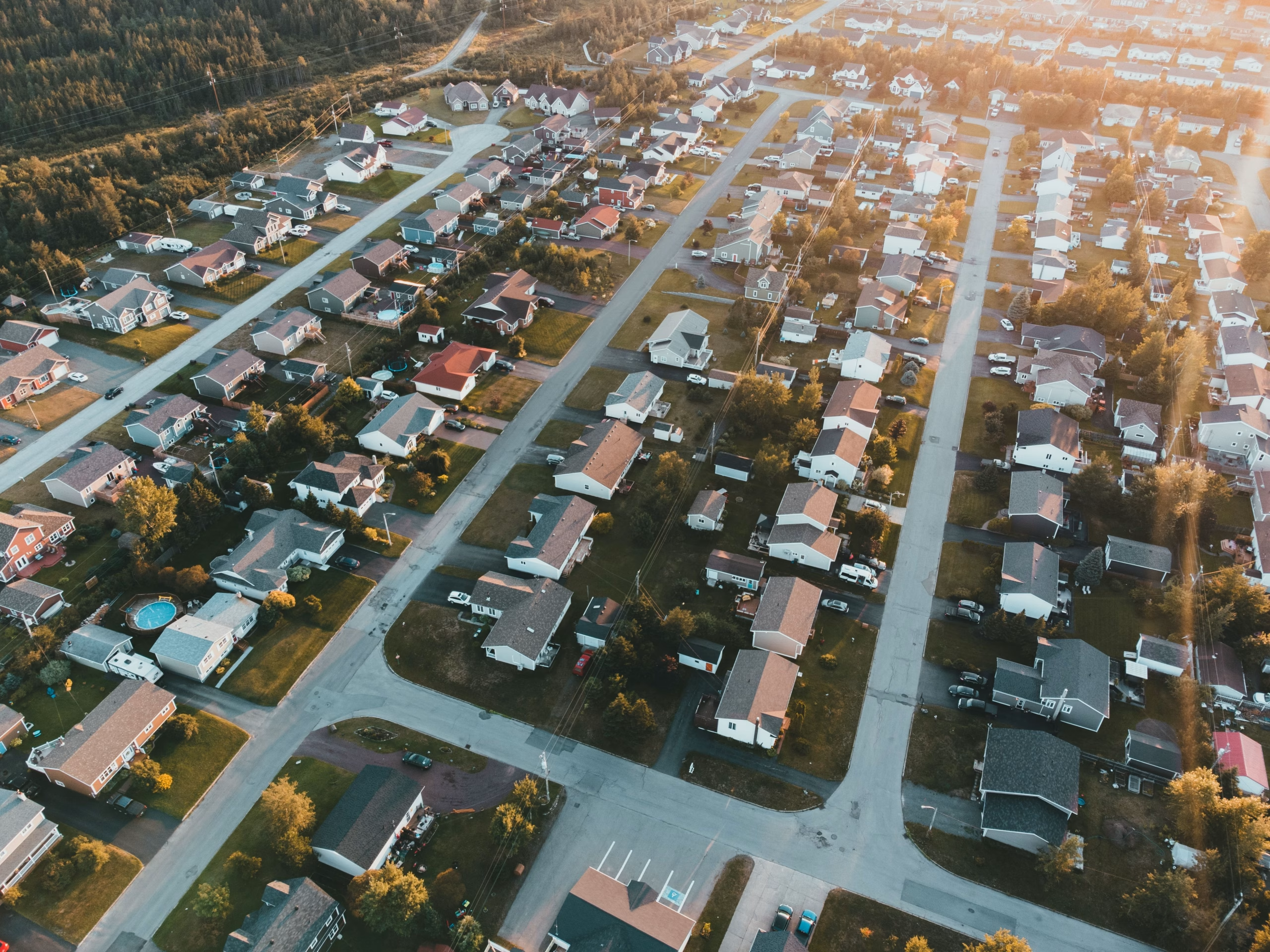
Explore Chicago homes for sale and compare available properties by price, location, bedrooms, bathrooms, property type, and other features that matter to your homebuying plans.
Chicago's housing stock includes detached single-family homes, condominiums, townhomes, bungalows, two-flats, and other small multifamily properties. The right property depends on more than its asking price. Property taxes, association costs, insurance, condition, inspection findings, financing, repairs, and ongoing maintenance can all affect the total cost of ownership.
Use DEI Realty LLC's property search to explore available listings. When a property deserves a closer look, DEI Realty LLC can help you compare the details, prepare for a showing, and organize the next steps in your Chicago homebuying plan.
Search Chicago Homes for Sale
Use DEI Realty LLC's live property search to browse current listings and filter available homes by price, bedrooms, bathrooms, area, lot size, and other property criteria.
Explore Available Properties
Open the DEI Realty LLC property search to review current listings, compare property details, and narrow your search based on the criteria that matter to you.
Search Available PropertiesListing note: The DEI Realty LLC property page may include homes outside the City of Chicago. Verify the property location and current listing status before relying on a property as part of a Chicago-specific home search.
What Is the Chicago Housing Market Like Right Now?
The Bottom Line: Chicago buyers entered summer 2026 with higher sale prices and fewer homes available than one year earlier. Illinois REALTORS® data reported for June 2026 showed a City of Chicago median sale price of $427,500 and 3,338 homes available for sale, while inventory was down 28.9% year over year.
Chicago Housing Market Snapshot — June 2026
| Chicago Market Metric | June 2026 | Year-over-Year Change |
|---|---|---|
| Median Sale Price | $427,500 | +6.9% |
| Homes Sold | 2,417 | +0.9% |
| Available Inventory | 3,338 homes | -28.9% |
These citywide figures provide useful context, but Chicago does not operate as one uniform housing market. Price, competition, property type, condition, taxes, and available inventory can differ by location and price range.
The key takeaway is that citywide statistics should help establish context, not determine what an individual Chicago property is worth or whether a particular offer strategy is appropriate.
Reporting period: June 2026. Geography: City of Chicago. Source: Illinois REALTORS® data reported by Chicago Agent Magazine.
Are There Fewer Chicago Homes for Sale in 2026?
The Bottom Line: Available inventory in the City of Chicago was substantially lower in June 2026 than one year earlier. The reported number of homes for sale declined from 4,693 in June 2025 to 3,338 in June 2026, a 28.9% year-over-year decrease.
Lower inventory can make preparation more valuable, but it does not mean every Chicago home receives the same level of buyer competition. Property type, price range, condition, location, seller expectations, and financing requirements can materially affect an individual sale.
Prepare Before the Right Property Appears
- Establish a realistic purchase budget.
- Discuss financing and preapproval with a qualified lender.
- Identify preferred property types and locations.
- Estimate property taxes, insurance, and HOA costs.
- Separate must-have property features from preferences.
- Plan how quickly property tours can be scheduled.
- Review relevant comparable sales before making an offer.
- Maintain funds for inspections, closing costs, and repairs.
How Can You Search Chicago Homes for Sale by Neighborhood?
The Bottom Line: Chicago housing conditions vary by location, so neighborhood-level searches can help buyers compare available inventory, housing types, transportation options, parking, property costs, and other objective factors within specific parts of the city.
DEI Realty LLC can build out dedicated search pages as sufficient inventory and unique local information become available.
- Lincoln Park homes for sale
- Lake View homes for sale
- Logan Square homes for sale
- Wicker Park homes for sale
- Bucktown homes for sale
- West Loop homes for sale
- South Loop homes for sale
- Hyde Park homes for sale
- Andersonville homes for sale
- Avondale homes for sale
- Beverly homes for sale
- Jefferson Park homes for sale
Editorial note: DEI Realty LLC neighborhood content focuses on objective housing, transportation, cost, service, infrastructure, and amenity information. Neighborhoods should not be ranked or recommended according to protected characteristics or subjective demographic suitability.
What Types of Homes Can You Buy in Chicago?
The Bottom Line: Chicago buyers can encounter detached single-family homes, condominiums, townhomes, bungalows, two-flats, and other small multifamily properties. Each property type comes with different ownership costs, maintenance responsibilities, financing considerations, and due-diligence requirements.
Single-Family Homes
Buyers should evaluate property condition, mechanical systems, exterior maintenance, parking, taxes, insurance, and expected repair needs.
Future SEO page: Chicago Single-Family Homes for Sale
Chicago Condos
Condo buyers should evaluate both the unit and the association, including assessments, reserves, insurance, rules, planned projects, financial documents, and special assessments.
Future SEO page: Chicago Condos for Sale
Chicago Bungalows
Chicago bungalows are a recognizable local housing type. Property-specific condition, mechanical systems, updates, taxes, layout, and maintenance needs should all be investigated.
Townhomes
Ownership arrangements vary. Buyers should determine which exterior, insurance, maintenance, and shared-property responsibilities belong to the owner and which belong to an association.
Future SEO page: Chicago Townhomes for Sale
Chicago Two-Flats and Small Multifamily Properties
Two-, three-, and four-unit buildings are an important component of Chicago's housing stock. Research from the Institute for Housing Studies at DePaul University found that units in two-to-four-unit properties represented approximately 26% of all residential units in Chicago in the study data.
The Institute for Housing Studies also documented the loss of 11,775 housing units in two-to-four-unit properties between 2013 and 2019.
A buyer considering a two-flat or other small multifamily property should investigate:
- Legal unit count and zoning
- Existing leases and occupancy
- Building condition
- Separate or shared utilities
- Property taxes and insurance
- Financing requirements
- Expected operating expenses
- Property-specific rental income assumptions
Rental and investment projections should be evaluated on a property-specific basis. Consider consultation with appropriate real estate, lending, legal, tax, and financial professionals.
How Can You Search Chicago Homes by Price?
The Bottom Line: Purchase price is an important search filter, but a buyer's actual budget should also account for property taxes, insurance, association assessments, financing, maintenance, repairs, utilities, and closing expenses.
SEO note: Avoid automatically indexing every filter combination generated by a property-search system. Dedicated price-range pages should be created only when DEI Realty LLC can provide useful inventory and unique supporting content.
How Should You Compare Chicago Homes for Sale?
The Bottom Line: Compare the full ownership picture rather than focusing only on list price. Two similarly priced Chicago homes can carry materially different taxes, HOA assessments, insurance costs, maintenance requirements, repair exposure, and monthly ownership expenses.
| Factor | What to Investigate | Why It Matters |
|---|---|---|
| Price | Asking price and relevant comparable sales | Helps place the property in local market context |
| Property Taxes | Current bill, assessment, exemptions, reassessment | Affects recurring ownership costs |
| HOA / Condo Fees | Monthly dues, reserves, projects, special assessments | Can materially affect monthly housing costs |
| Condition | Roof, structure, mechanicals, plumbing, electrical | Identifies possible repair and maintenance exposure |
| Insurance | Property-specific coverage and pricing | Varies by property and coverage requirements |
| Parking | Deeded, assigned, leased, garage, or street | Can affect convenience and total housing costs |
| Transportation | CTA, Metra, driving, walking, and buyer-specific routes | Helps evaluate practical location needs objectively |
| Financing | Buyer eligibility and property eligibility | Not every property works equally with every loan program |
How Do Property Taxes Affect a Chicago Home Purchase?
The Bottom Line: Chicago buyers should review taxes property by property because the current bill, assessed value, exemptions, appeals, and future assessment changes can materially affect the total cost of owning a home.
Cook County's Homeowner Exemption reduces the Equalized Assessed Value of an eligible principal residence by $10,000. Once approved, the exemption generally renews automatically while eligibility continues.
The Cook County Senior Exemption provides an additional $8,000 reduction in Equalized Assessed Value for eligible homeowners age 65 or older and also generally renews automatically once approved.
Cook County also offers a Low-Income Senior Assessment Freeze Exemption. Current published eligibility information uses a household-income limit of $65,000 or less for the applicable income year. The exemption freezes the qualifying property's EAV rather than the final tax bill and requires annual application.
Before Buying, Review:
- The property's current tax bill
- The assessed and equalized assessed value
- Which exemptions currently apply
- Whether the buyer may qualify for applicable exemptions
- Recent assessment changes
- Pending or recent assessment appeals
- The relevant reassessment cycle
Property-tax note: Exemption rules and tax bills can change. Verify property-specific information with the Cook County Assessor and consult an appropriate tax, legal, or real estate professional when necessary.
What Costs Should Chicago Buyers Plan for Beyond the Purchase Price?
The Bottom Line: A Chicago home purchase can involve costs beyond the down payment, including lender charges, inspections, attorney expenses, title-related costs, prepaid taxes and insurance, escrow funding, transfer taxes, moving costs, and property-specific repairs.
- Down payment
- Loan and lender charges
- Property appraisal
- Home inspection and specialized inspections
- Attorney and title-related expenses
- Applicable transfer taxes and recording charges
- Homeowners insurance
- Prepaid mortgage interest
- Initial tax and insurance escrow deposits
- Condominium or homeowners-association expenses
- Moving costs and initial repair reserves
Buyers should request transaction-specific estimates from their lender, attorney, title professional, insurance provider, and other appropriate professionals rather than relying only on a broad national percentage.
What Should You Know Before Buying a Home in Chicago?
The Bottom Line: A prepared Chicago home search combines financing readiness, property-specific research, ownership-cost analysis, inspection, comparable-sale review, and appropriate legal and professional due diligence before closing.
- Establish a realistic purchase budget.
- Discuss financing with a qualified lender.
- Obtain preapproval when appropriate.
- Define preferred property types and locations.
- Search current available properties.
- Tour relevant homes.
- Review comparable sales and current competition.
- Evaluate taxes and recurring ownership costs.
- Develop a property-specific offer strategy.
- Complete inspection and attorney review.
- Address title, financing, and closing requirements.
- Complete final property-specific due diligence.
Chicago Homebuying Resources
Use these DEI Realty LLC resources to go deeper into the buying process, property types, affordability, and current market conditions.
Build Your Chicago Home Search
Organize the criteria that matter most before you start comparing properties. This planning tool creates a simple search summary you can use when contacting DEI Realty LLC.
Your Chicago Home Search Summary
Ready to Take the Next Step in Your Chicago Home Search?
DEI Realty LLC can help you evaluate available properties, compare ownership costs, prepare for showings, and organize a practical homebuying plan around your goals.
Frequently Asked Questions About Chicago Homes for Sale
Use a current property-search tool to filter available listings by location, price, property type, bedrooms, bathrooms, and other criteria. Then compare property condition, taxes, ownership costs, and relevant recent sales before deciding which homes deserve further investigation.
Illinois REALTORS® data reported for June 2026 showed a City of Chicago median sale price of $427,500, up 6.9% from June 2025. A citywide median provides market context but does not determine the value of an individual property.
Yes, based on the June 2026 citywide data used for this page. Available inventory fell from 4,693 homes in June 2025 to 3,338 homes in June 2026, a 28.9% year-over-year decline. Inventory can still vary by location, property type, and price range.
Chicago housing options include detached single-family homes, condominiums, townhomes, bungalows, two-flats, and other small multifamily properties. Ownership costs and due-diligence requirements differ by property type.
Review both the individual unit and the condominium association. Important considerations can include monthly assessments, reserves, association insurance, rules, planned projects, special assessments, financial documents, parking arrangements, and applicable ownership or leasing restrictions.
Verify legal unit count, zoning, condition, existing leases, utility configuration, financing requirements, taxes, insurance, and operating expenses. Any expected rental income should be evaluated using property-specific information.
Property taxes are part of the recurring cost of ownership. Buyers should review the specific property's tax bill, assessment, exemptions, appeals, and potential assessment changes rather than applying a generic citywide tax percentage.
Depending on the transaction, additional costs can include lender charges, appraisal, inspections, attorney and title expenses, prepaid insurance and taxes, escrow deposits, transfer taxes, association expenses, moving costs, and property repairs.
Conclusion
Searching for Chicago homes for sale is most useful when the property search is combined with a clear understanding of current inventory, ownership costs, property condition, financing, taxes, and the due diligence required for the specific home.
DEI Realty LLC's property search can help you identify available options, while the buyer resources on this page can help you compare those properties more carefully before deciding which homes deserve a closer look.
The key takeaway is simple: start with the listings, compare the complete ownership picture, verify property-specific information, and use professional guidance where the transaction requires legal, lending, tax, inspection, or other specialized expertise.
Official Sources and Disclaimer
- Chicago Agent Magazine — June 2026 Illinois REALTORS® Market Data
- Cook County Assessor — Homeowner Exemption
- Cook County Assessor — Senior Exemption
- Cook County Assessor — Low-Income Senior Freeze
- DePaul Institute for Housing Studies — Chicago 2-to-4-Unit Housing Stock
- DePaul Institute for Housing Studies — Loss of Chicago 2-to-4-Unit Buildings
Disclaimer: This page provides general educational real estate information and does not constitute legal, tax, financial, mortgage, insurance, or investment advice. Market conditions, property information, program rules, taxes, and financing requirements can change. Buyers should verify current property-specific information and obtain guidance from appropriately licensed professionals. Equal Housing Opportunity.