
Rent vs Buy Chicago: Navigating the Chicago Housing Market in 2026
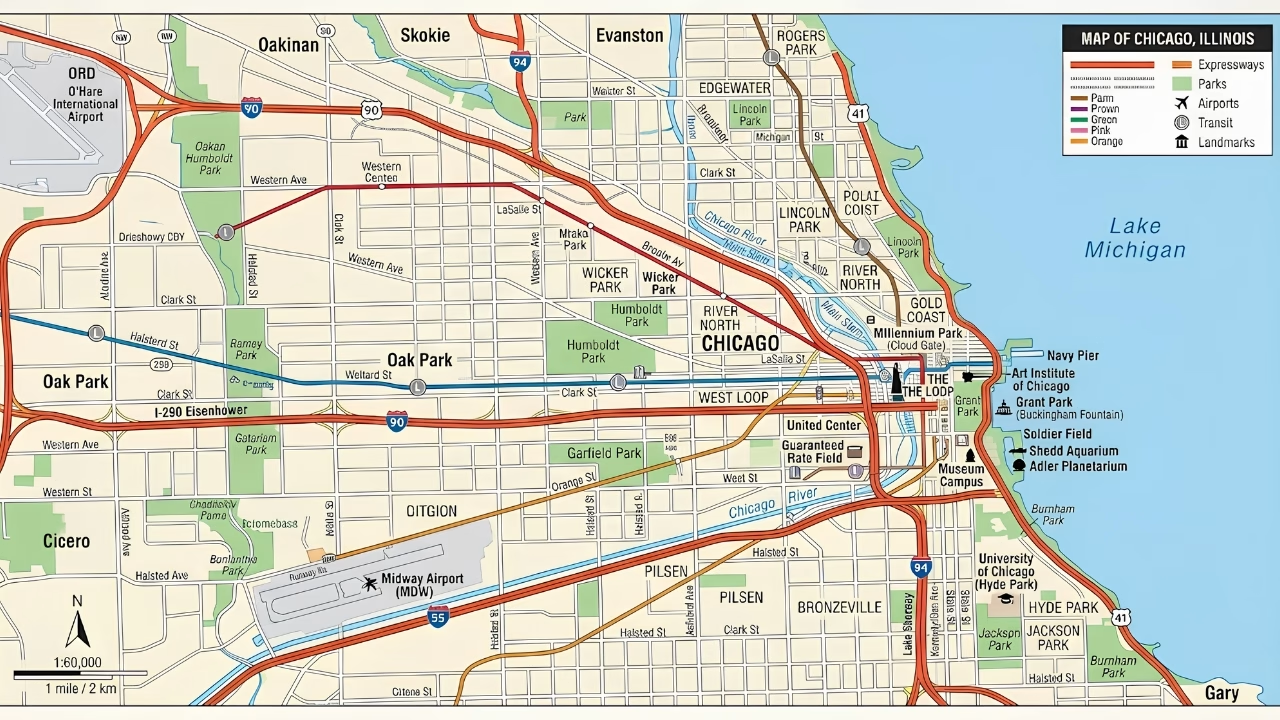
The rent vs buy Chicago decision is not just about comparing a monthly rent payment to a mortgage payment. It is about your budget, your timeline, your lifestyle, and how prepared you feel for the responsibilities of homeownership.
At DEI Realty LLC, we help buyers, renters, sellers, and property owners look at the full picture before making a real estate move. Chicago has its own local market conditions, but national trends like mortgage rates, inventory, and affordability also shape what buyers and renters experience here.
Quick Answer: Should You Rent or Buy in Chicago?
Renting may be the better choice if you need flexibility, want lower upfront costs, or are still building savings for a future purchase. Buying may make more sense if you plan to stay in Chicago for several years, have steady income, and want to build equity over time.
In May 2026, Illinois REALTORS reported that the City of Chicago median sales price for all property types was $420,000, up 7.7% year over year. Nationally, Freddie Mac reported the average 30-year fixed mortgage rate at 6.43% as of July 2, 2026. These numbers matter because higher prices and elevated rates can make monthly ownership costs feel different from renting.
📊 Expert Market Deep Dive: Summer 2026 Conditions
Unlike basic rent vs buy calculators, understanding the Chicago housing market in 2026 requires looking at real neighborhood metrics. If you are comparing a lease renewal to a mortgage pre-approval right now, here is the exact data driving the local SERP and real estate market:
- Chicago Real Estate is Resilient: While coastal national markets are cooling, Chicago continues to post competitive sales and strong, insulated demand with year-over-year growth.
- The Break-Even Horizon: Nationally, it takes about six years for buying to financially beat renting. In the Midwest, strong appreciation and relatively affordable entry points often shrink this window compared to coastal cities.
- Rent is Climbing: With average rents hovering between $2,083 and $2,521, the financial gap between a monthly mortgage payment and monthly rent is rapidly narrowing in the city.
Chicago and National Market Snapshot
Chicago is a local, neighborhood-by-neighborhood real estate market. A condo in the Loop, a two-flat in a residential neighborhood, a single-family home, and an investment property can each come with very different costs and opportunities.
Chicago housing market factors
According to the Illinois REALTORS City of Chicago May 2026 report, the median sales price for all properties was $420,000. The same report showed 2,283 closed sales, 3,337 homes for sale, and a median of 24 days on market.
National housing market factors
The National Association of REALTORS reported that May 2026 existing-home sales rose 3.2% year over year to a seasonally adjusted annual rate of 4.17 million. The national median existing-home sales price was $429,300, and unsold inventory represented a 4.5-month supply.
Chicago rent factors
Rent data varies by source and property type. Zillow reported average rent in Chicago at $2,083 for all bedrooms and all property types as of July 1, 2026. RentCafe reported average apartment rent in Chicago at $2,521 as of July 1, 2026.
Rent vs Buy Chicago: Cost Comparison
A common mistake is comparing rent only to the mortgage principal and interest payment. That leaves out major ownership costs like Cook County property taxes, homeowners insurance, HOA dues, repairs, and maintenance.
| Cost Category | Renting in Chicago | Buying in Chicago |
|---|---|---|
| Upfront costs | Security deposit, first month’s rent, application fees, move-in fees | Down payment, closing costs, inspection, appraisal, moving costs |
| Monthly payment | Rent, utilities, renter’s insurance, parking or pet fees if applicable | Mortgage, taxes, insurance, HOA dues, utilities, maintenance reserve |
| Flexibility | Usually easier to move at lease end | Better suited for a longer timeline (5+ years) |
| Equity | No direct equity from monthly rent | Potential to build equity over time |
| Maintenance | Typically handled by the landlord or property manager | Owner is responsible for repairs and long-term upkeep |
Before choosing, compare the total monthly cost of each option. DEI Realty LLC can help you review local property types, estimated ownership costs, and neighborhood considerations so you can make a decision with clearer numbers.
When Renting in Chicago May Make More Sense
Renting can be a smart decision when it gives you flexibility and protects your budget. It is not always a step backward. For many people, renting is the right move while they prepare for a stronger purchase later.
You may want flexibility
If your job, household needs, or preferred neighborhood may change soon, renting can give you more room to adjust. This is especially helpful if you are new to Chicago and still learning commute patterns, transit access, parking needs, and building types.
You may need more time to prepare financially
Buying requires more than a down payment. You also need closing costs, emergency savings, repair reserves, and enough room in your monthly budget to handle ownership comfortably.
You may want fewer maintenance responsibilities
Renters usually have fewer repair responsibilities than homeowners. If you do not want to manage unexpected costs like appliances, plumbing, roof issues, or building repairs, renting may be a better fit for now.
When Buying in Chicago May Be the Stronger Choice
Buying may be the stronger option when you are financially ready, plan to stay long enough, and want more control over your living space.
You plan to stay for several years
If you expect to stay in Chicago for five years or longer, buying may give you more time to offset upfront costs and build equity. Your exact breakeven point depends on the purchase price, loan terms, taxes, appreciation, and future selling costs.
You want long-term stability
A fixed-rate mortgage can help stabilize the principal and interest part of your payment. Your taxes, insurance, and HOA dues may still change, but ownership can provide more long-term control than renewing leases year after year.
You are ready for ownership costs
Homeownership can be rewarding, but it comes with responsibility. Chicago buyers should pay close attention to property taxes, HOA dues, condo reserves, possible special assessments, insurance, and maintenance.
A Simple Rent vs Buy Checklist
Use this checklist before deciding whether to rent or buy in Chicago:
- Do I plan to stay in Chicago for at least three to five years?
- Do I have savings beyond the down payment?
- Can I afford the full monthly cost, not just the mortgage?
- Have I compared Cook County property taxes, HOA dues, and insurance?
- Am I comfortable handling maintenance and repairs?
- Do I understand the neighborhood and property type I am considering?
- Would buying support my long-term goals without creating financial stress?
If you are unsure, start with a realistic comparison. Review your current rent, expected mortgage payment, taxes, insurance, HOA dues, maintenance, and how long you plan to stay.
Chicago Buyers Should Watch These Details
Chicago buyers should look beyond the listing price. Two homes with the same price can have very different monthly costs depending on taxes, assessments, condition, and financing.
Condo fees and building reserves
Condo buyers should review HOA dues, reserves, building rules, planned repairs, and any special assessments. These items can affect affordability and resale value.
Property condition
Inspection results matter. A home that needs major repairs may still be a good opportunity, but only if the price, repair budget, and timeline make sense.
Neighborhood-by-neighborhood pricing
Chicago does not move as one market. Pricing, demand, inventory, and property types vary across the city. A local real estate conversation can help you compare options more clearly.
National Trends That Affect Chicago Renters and Buyers
Even though real estate is local, national trends still influence Chicago decisions. Mortgage rates affect buying power. Inventory affects negotiating room. National affordability conditions can keep more people renting longer, which may influence rental demand.
When mortgage rates are elevated, the same home price can create a higher monthly payment. That is why it is important to get updated loan estimates before assuming what you can afford.
For renters, national affordability pressure can also matter. If more households delay buying, rental demand may stay stronger in some markets. This is one reason Chicago renters should compare renewal terms, fees, and available alternatives before signing a new lease.
DEI Realty LLC’s Perspective
At DEI Realty LLC, we do not believe every renter should rush to buy. Renting can be the right choice. Buying can also be the right choice. The goal is to make an informed move that supports your life, your finances, and your long-term plans.
If you are preparing to buy, DEI Realty LLC can help you understand property types, compare neighborhoods, estimate ownership costs, and connect your search to your real budget. If you are not ready yet, we can help you identify the steps that may put you in a stronger position later.
For more guidance, visit our home buyer resources, explore our real estate blog, or connect with us through our contact page.
FAQs About Rent vs Buy Chicago
Is it cheaper to rent or buy in Chicago?
It depends on your timeline and neighborhood. While renting avoids property taxes and maintenance, buying in Chicago allows you to build equity over time. Nationally, the break-even point for buying vs renting is about five to six years, though this can be shorter in affordable Midwest cities.
Is it better to rent or buy in Chicago?
It depends on your budget, timeline, savings, and goals. Renting may be better if you need flexibility or want lower upfront costs. Buying may be better if you plan to stay several years and are ready for the full cost of ownership.
What is the average rent in Chicago?
Rent estimates vary by source and property type. Zillow reported average Chicago rent of $2,083 as of July 1, 2026. RentCafe reported average apartment rent of $2,521 as of July 1, 2026.
What is the median home price in Chicago?
Illinois REALTORS reported a City of Chicago median sales price of $420,000 for all property types in May 2026.
How do national mortgage rates affect Chicago buyers?
Mortgage rates directly affect monthly payments and buying power. Freddie Mac reported the 30-year fixed-rate mortgage averaged 6.43% as of July 2, 2026.
Should I talk to a real estate professional before I am ready to buy?
Yes. A conversation can help you understand what is realistic, what steps to take next, and whether renting, buying, or waiting makes the most sense.
Ready to Compare Renting vs Buying in Chicago?
DEI Realty LLC can help you look at the numbers, compare local options, and decide whether renting, buying, or preparing for a future purchase is the right next step.
Contact DEI Realty LLCSources
- Illinois REALTORS, City of Chicago Monthly Local Market Update, May 2026: Illinois REALTORS City Report
- Freddie Mac Primary Mortgage Market Survey, July 2, 2026: Freddie Mac Mortgage Rates
- National Association of REALTORS Existing-Home Sales Report, May 2026: NAR Existing-Home Sales
- Zillow Rental Manager, Chicago Rental Market Trends: Zillow Chicago Rent Trends
- RentCafe, Chicago Rental Market Trends: RentCafe Chicago Rent Trends
Real estate, tax, mortgage, and legal decisions should be reviewed with qualified professionals. Market data can change quickly, so confirm the latest numbers before making a purchase, lease, or sale decision.