
7 Red Flags to Watch for in an Older Home in Chicago Before You Buy (Or Sell)
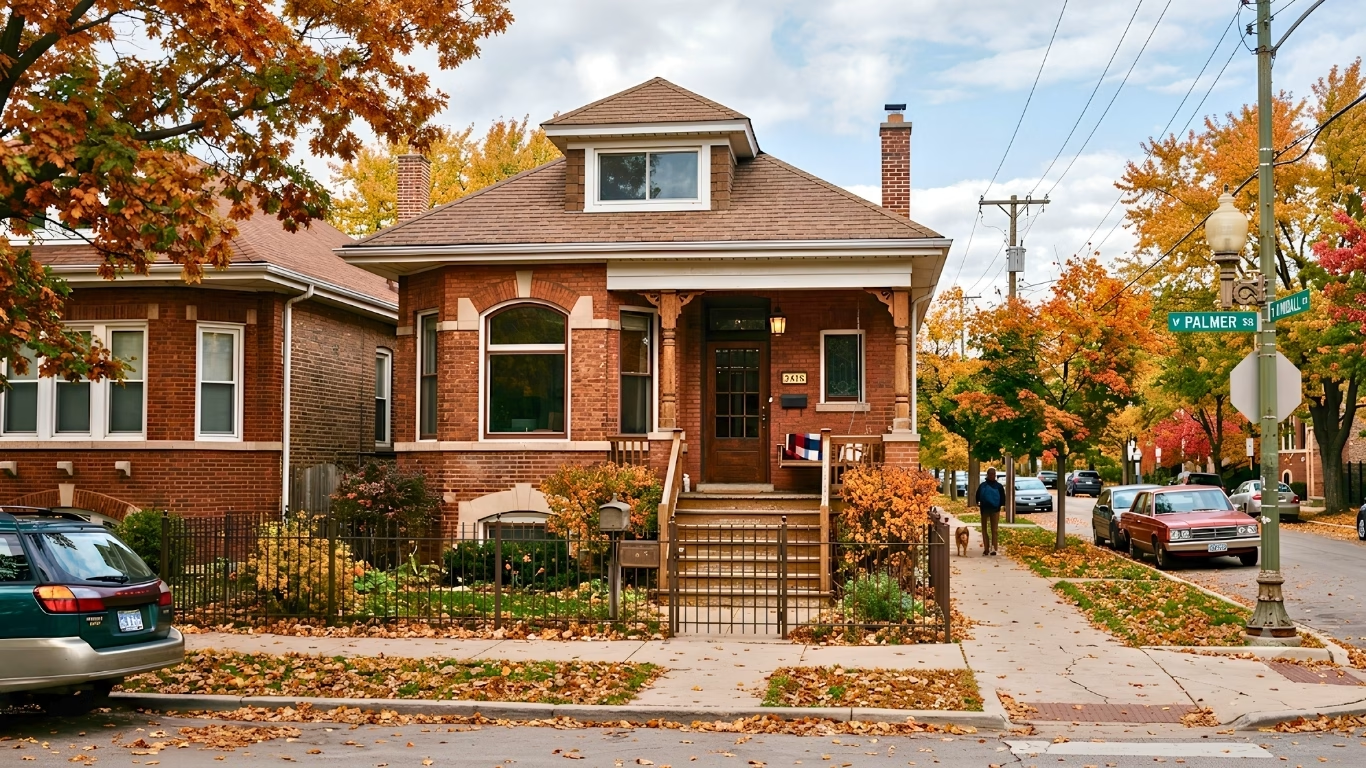
Chicago possesses one of the densest historical housing inventories in the United States. While national real estate portals offer generic advice on "buying an old house," they fail to prepare buyers for the hyper-local realities of Cook County.
Homes throughout landmark neighborhoods like Logan Square, Beverly, and Portage Park were constructed generations before modern structural standards. Here is the definitive guide to the structural vulnerabilities unique to Chicagoland.
Deep Architectural Vulnerabilities in Chicago
1. Sub-Grade Water Intrusion and Glacial Clay Soil
Chicago sits on a deep bed of glacial clay soil, which is notorious for its violent shrink-swell cycle during freeze-thaw seasons. When heavy spring downpours supersaturate this dense clay, it creates intense hydrostatic pressure that forces groundwater directly through basement floor seams and cold joints.
If you see white, chalky powder on the basement brickwork, you are looking at efflorescence—the physical mineral deposit left behind when water pushes through the foundation.

2. Hazardous, Outdated Electrical Trunks
Properties built before the 1950s often still hide active, ungrounded knob-and-tube wiring layouts behind modern plaster. Furthermore, inspectors frequently uncover Federal Pacific Electric (FPE) Stab-Lok breaker panels, which are highly documented to fail during overcurrent scenarios, creating serious fire hazards.
3. Lead Service Lines and Galvanized Pipes
Chicago mandated lead water pipes longer than nearly any other US city (until 1986), leaving over 400,000 active lead water service lines in the ground today. While the City of Chicago's Equity Lead Service Line Replacement Program is making strides, replacing these lines privately can easily cost a homeowner over $15,000. Internally, pre-1960s galvanized iron pipes corrode, restricting water pressure and leaching mineral deposits.
Interactive Repair Cost Estimator
Select an inspection issue below to see average Chicago contractor costs.
4. Lateral Sewer Main Pipe Failures
Most residential configurations built before mid-century use original vitrified clay main lateral lines. Because Chicago parkways are heavily lined with mature trees, root intrusion is the primary driver of total sewer lateral failure across the city, eventually triggering complete line collapse and expensive street excavation.
Overwhelmed by Repair Costs? You Don't Have to Fix It.
Sewer lines, lead pipes, and foundation stabilization can easily exceed $40,000 out of pocket. If you own an older Chicago property and don't want to deal with contractors, DEI Realty LLC provides guaranteed cash offers.
Sell your property strictly "As-Is." We take on the structural risks so you can walk away clean.
Get Your Free As-Is Cash Offer Today5. Asbestos Insulation and Floor Tiles
Many Chicago homes built prior to 1980 contain asbestos. It is commonly found wrapping basement steam pipes (often resembling white corrugated cardboard) or within 9x9 inch vinyl floor tiles. Remediation during a renovation requires costly, legally compliant abatement teams.
6. Sagging Floor Joists and Foundation Settling
Due to Chicago's proximity to Lake Michigan and its shifting clay soils, historic homes often suffer from severe differential settlement. Look for heavily sloping floors or diagonal plaster cracks radiating from door frames, which often point to compromised, century-old load-bearing beams.
7. Outdated Radiator Boilers and HVAC Inefficiencies
While radiator heat is a staple of classic Chicago two-flats and bungalows, original cast-iron boiler systems are massively energy inefficient. Retrofitting these historical properties for modern central forced air (HVAC) often requires opening up lath-and-plaster walls and sacrificing ceiling height to run ductwork.
Your DIY Pre-Inspection Walkthrough Checklist
Before paying a certified inspector $500+, walk through the property and check these items yourself:
The Chicago Older Home Repair Cost Grid
Repair financial footprints across Cook County reflect localized labor metrics. Use this data map to contextualize risks:
| System Risk Area | Regional Chicago Cost Scope | Primary Vulnerability Zone |
|---|---|---|
| Lateral Sewer Trunk Replacement | $5,000 – $20,000 | Beverly, Historical North Shore |
| Foundation Masonry & Settlement | $2,400 – $25,000 | Logan Square, Portage Park |
| Total Electrical Panel Rewire | $5,500 – $15,000+ | Hyde Park Multi-Family Units |
| Lead Line Supply Modernization | $1,865 – $30,000 | Citywide Core (Pre-1986) |
| Asbestos Abatement (Pipes/Tiles) | $1,500 – $5,000+ | Pre-1980s Bungalows |
Frequently Asked Questions About Chicago Inspections
Do I have to disclose a flooded basement when selling a house in Chicago?
Yes. Under the Illinois Residential Real Property Disclosure Act, sellers must disclose material defects they are aware of, including recurring foundational leaks or flooding.
Can you sell a house in Chicago with lead pipes?
Yes, you can legally sell a home with lead service lines. However, traditional retail buyers often demand expensive credits after the inspection to cover replacement costs. Selling "As-Is" to a cash buyer avoids this negotiation.
Is knob and tube wiring legal in Chicago?
Existing knob and tube wiring is "grandfathered" in, but it violates modern building codes if altered. More importantly, most modern insurance companies will refuse to insure a home with active knob and tube wiring, forcing a rewiring before a standard mortgage can be approved.